 Masstamilanweb.com
As the commercial drone industry matures, the focus has shifted from simple aerial photography to complex, high-precision data acquisition. For professionals operating in sectors like infrastructure inspection, precision agriculture, and topographical mapping, a common question arises: is a UAV gimbal lidar system a necessary upgrade? While standard camera setups provide visual context, adding a high-precision Benewake sensor to a stabilized platform transforms a drone from a viewing tool into a sophisticated measuring instrument capable of navigating the most challenging industrial landscapes.
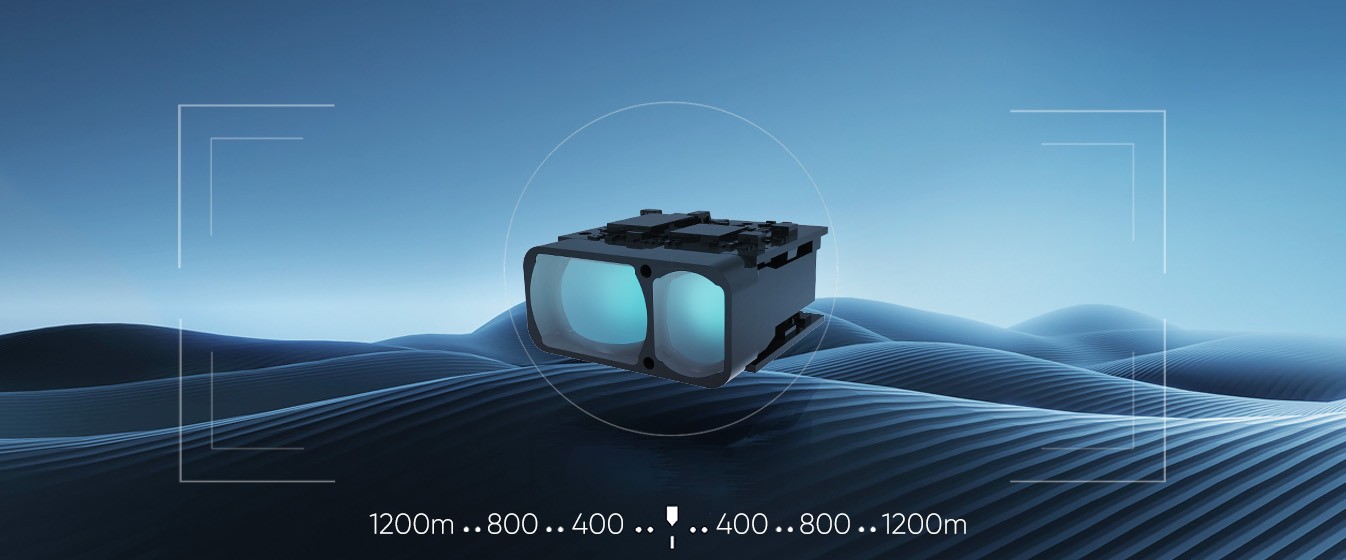
Integrating a rangefinder into a gimbal-stabilized system offers significant advantages in data reliability and flight safety. By stabilizing the sensor, the flight controller receives consistent vertical or directional distance data, even as the aircraft maneuvers through wind or executes complex flight paths over uneven terrain.
Enhancing Precision Through Stabilization
A primary challenge in UAV distance sensing is the constant movement of the aircraft. When a drone tilts to move forward or counteract a breeze, a fixed sensor’s beam inevitably angles away from the target. This leads to inaccurate “slant range” calculations, where the measured distance is longer than the actual vertical altitude. A UAV gimbal lidar setup solves this by keeping the laser beam oriented correctly relative to the ground or the target structure at all times.
This level of stabilization is particularly valuable during high-precision tasks such as wind turbine blade inspections or power line monitoring. The centimeter-level accuracy provided by a Benewake module ensures that the drone maintains a safe, fixed distance from expensive equipment, reducing the risk of collisions while simultaneously providing the stable metadata needed for high-fidelity 3D modeling and photogrammetry.
Operational Advantages of LiDAR Integration
Investing in a LiDAR-equipped gimbal provides several functional benefits that go beyond simple altitude holding:
Consistent Data Synchronization: When a LiDAR sensor is mounted alongside a camera on a gimbal, the distance data is perfectly aligned with the visual frame. This is essential for creating accurate digital twins or localized maps where spatial data must match visual evidence.
Reduced Pilot Workload: Automated terrain following and obstacle avoidance become much more reliable when the sensor is stabilized. This allows the operator to focus on the quality of the inspection and data capture rather than constant manual flight adjustments.
Performance in Low Light and High Contrast: Unlike optical sensors or cameras that rely on ambient light, a LiDAR sensor operates effectively in total darkness and high-contrast environments. This provides a 24/7 operational capability that traditional sensors simply cannot match.
Environmental Resilience: Modern LiDAR systems use sophisticated algorithms to filter out “noise” from dust, light rain, or fog, ensuring that flight stability is maintained even when visibility is less than ideal.
Featured Solution: The TFA1200-L LiDAR Sensor
The TFA1200-L represents a high-performance choice for professional UAV integration, offering a balance of long-range capability and an ultra-lightweight design. This single-channel dToF (direct Time-of-Flight) module is specifically engineered to handle the rigorous demands of industrial flight, providing the technical edge required for high-stakes UAV gimbal lidar applications where precision is non-negotiable.
Extended Operational Range: The TFA1200-L offers a robust detection range of up to 40m, making it suitable for larger aircraft and higher-altitude inspections where a wider safety buffer is required to protect the airframe.
Precision and Reliability: It maintains a distance resolution of 1cm and an accuracy of plus or minus 5cm within its primary range (0.1m to 5m). For distances beyond 5m, the accuracy remains within plus or minus 1%, ensuring that structural measurements are consistently dependable.
Industrial-Grade Integration: Supporting a frame rate of up to 1000Hz, this sensor provides the high-speed data flow necessary for responsive flight control. It is designed with a small footprint and low power consumption (less than or equal to 1W), allowing it to be integrated into various gimbal architectures without compromising the drone’s battery life or flight stability.
Impact on ROI and Mission Success
While the initial investment in a stabilized LiDAR system is higher than a basic fixed-sensor setup, the return on investment is realized through improved data quality and significantly reduced equipment risk. By preventing a single collision or avoiding a mission restart due to inaccurate altitude data, the system pays for itself in a single deployment.
In many industrial scenarios, the ability to fly closer to a target with confidence allows for higher-resolution imaging. This leads to better defect detection and more thorough inspections, providing a higher value service to clients. For a professional drone fleet, the transition to UAV gimbal lidar represents a move toward the highest standards of technical competence, operational safety, and data integrity.
Secure Your Fleet with Benewake Innovation
In the autonomous era, the difference between a successful mission and a costly failure often comes down to the quality of the drone’s perception. Benewake (Beijing) Co., Ltd. is committed to engineering the most reliable Time-of-Flight solutions in the industry, ensuring your UAV has the “eyes” it needs to perform in the most demanding conditions on Earth.
Don’t let inferior sensing limit your operational potential. Contact the Benewake technical team today to discuss how the TFA1200-L can be integrated into your fleet to provide the stability and precision your clients demand. Take the first step toward a safer, more efficient, and data-driven future.