 Masstamilanweb.com
For solar installers, distributors, and energy solution providers, the “best” inverter is rarely defined by a single metric. Instead, it is defined by how well the technology meets the specific constraints of a project site—be it a complex residential roof, a highly shaded urban environment, or a large-scale commercial facility. In recent years, the debate between choosing a smart microinverter or a traditional string inverter has intensified. As the industry moves toward module-level power electronics (MLPE), brands like HYXI are leading the charge by offering high-performance microinverter solutions that challenge the status quo of traditional string architecture.
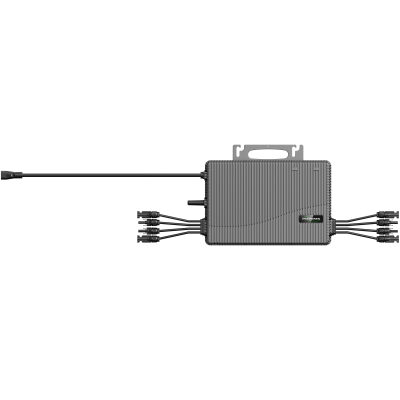
The Architecture: Module-Level vs. String-Level Conversion
To provide the best advice to your clients, it is crucial to understand the fundamental difference in how these systems handle energy. A traditional string inverter connects multiple solar panels in a series “string.” The DC power from all panels is sent to a single central unit for conversion into AC power.
Conversely, a smart microinverter performs this conversion at the individual module level. By installing a unit directly behind each panel (or group of panels, in the case of 2-in-1 or 4-in-1 models), the system eliminates the “Christmas light effect.” In a traditional string, if one panel is shaded or soiled, the output of the entire string drops to the level of the weakest performer. With a microinverter, each panel operates independently, ensuring that a single shaded module does not compromise the yield of the remaining array.
Why the HYXI Smart Microinverter Outperforms Traditional Systems
When evaluating hardware for B2B projects, technical specifications and reliability are the primary drivers of selection. HYXI has engineered its microinverter series to solve the inherent limitations of traditional string inverters while maintaining the durability required for 25-year lifecycles.
- Low Startup Voltage and Extended Harvesting
Traditional string inverters typically require a high “startup voltage” (often 160V or higher) before they begin converting energy. This means they remain dormant during the early morning and late evening. The HYXI smart microinverter features an ultra-low startup voltage of just 20V. This technical advantage allows the system to begin producing power earlier at sunrise and continue later into the dusk, significantly increasing the cumulative daily energy yield compared to traditional systems.
- Enhanced Safety and Rapid Shutdown Compliance
Safety is a critical selling point for installers dealing with strict building codes. Traditional string systems carry high-voltage DC (up to 1000V or 1500V) across the roof, which poses a risk of DC arcing. HYXI microinverters operate at low voltages (typically below 60V DC), inherently reducing fire risks. Furthermore, because conversion happens at the module, they provide built-in rapid shutdown compliance without the need for additional, expensive external controllers.
- Superior Communication with iMesh Technology
Reliable monitoring is the backbone of modern O&M. While many traditional inverters struggle with signal stability in complex buildings, the HYXI series utilizes iMesh-powered Sub-1G communication. This technology allows for a transmission range of up to 1,500 meters and can penetrate up to 5.5 walls. For distributors, this means fewer service calls related to “lost communication” errors, providing a more stable user experience for the end-customer.
Precision Comparison: Technical Specifications
| Feature | Traditional String Inverter | HYXI Smart Microinverter (M2000) |
| MPPT Level | String Level (Multiple Panels) | Module Level (Individual Optimization) |
| Startup Voltage | High (120V – 200V) | Ultra-Low (20V) |
| Max. Input Current | Varies (often limited) | 16A – 20A (Compatible with 182/210mm modules) |
| Safety | High-Voltage DC Risk | Low-Voltage DC (<60V) |
| Monitoring | System-Level Visibility | Detailed Module-Level Diagnostics |
| Warranty | 5 – 12 Years | 12 Years Standard (Up to 25 Years Optional) |
The Installer’s Perspective: Installation and Scalability
For an energy solution provider, labor is the most significant variable in project profitability. Traditional string inverters require complex DC wiring, string sizing calculations, and often a dedicated “power room” or wall space for the heavy central unit.
The smart microinverter approach simplifies the workflow through a “plug-and-play” methodology. HYXI units feature a hook-type design that allows them to be fixed directly to the racking system. With 50% fewer components and steps required during the installation process, a team can commission a residential system in half the time it would take for a traditional string setup. Furthermore, scalability is effortless. If a client wishes to add two more panels in the future, you simply add another microinverter, rather than replacing a central string inverter that has reached its capacity limit.
Performance in Extreme Conditions
B2B stakeholders must ensure that the equipment they install can withstand local environmental stressors. Traditional inverters often require active cooling (fans), which are a common point of mechanical failure. The HYXI microinverter series utilizes natural convection cooling, meaning it is completely dust-tight and can withstand temporary immersion in water. These units are tested to operate at full load up to 50°C without de-rating, making them ideal for high-temperature roof environments where traditional string inverters might throttle their output to protect internal components.
Conclusion: Which Inverter Should You Choose?
While traditional string inverters remain a cost-effective choice for large-scale, unobstructed utility projects, the smart microinverter is the superior choice for the vast majority of residential and commercial applications.
By choosing HYXI, B2B partners gain access to a system that offers higher energy yields through module-level MPPT, enhanced safety through low-voltage architecture, and reduced O&M costs through intelligent IV diagnostics. As the global market shifts toward smarter, safer, and more efficient energy management, the ability to offer a high-performance smart microinverter like the HYXI series is what will differentiate a leading energy solution provider from the competition. Investing in HYXI technology isn’t just about buying hardware; it’s about providing a future-proof energy solution that maximizes value for the installer, the distributor, and the end-user alike.