 Masstamilanweb.com
Electrical insulation components for high-voltage systems can have long profiles, large molding areas, and demanding dimensional requirements. Their production depends on stable material flow, controlled clamping, repeatable injection, and a mould arrangement that suits the size of the finished component.
For manufacturers planning high voltage insulator production, equipment selection is becoming closely tied to process consistency and practical operation. An HTV silicone insulators injection machine must handle large components while giving operators workable access for mould installation, adjustment, injection control, and part removal. This relationship between equipment layout and product geometry will become more important as factories pursue consistent output across larger product ranges.
Large Insulators Place Different Demands on Equipment
HTV silicone rubber components are often moulded around long cores or into extended insulation profiles. The main challenge is not simply filling a cavity. The equipment must manage long material flow paths, large mould dimensions, and stable clamping throughout the production cycle.
Large electrical insulation parts can place different loads on a molding system than small rubber components. Clamping stability matters because larger moulds require firm support during injection. Material delivery also needs controlled movement so the compound reaches the required areas without unnecessary variation between cycles.
Machine layout has a direct effect on daily work. Operators need enough access for mould changes, product loading, and finished-part removal. When the machine structure matches the orientation of long products, production teams can organize these tasks with fewer handling steps.
Mould Access Can Influence Production Planning
A top-opening mould structure provides a practical arrangement for long electrical insulation components. Opening from above can improve access to large moulds and gives production teams more room to handle long parts during loading and removal.
This structure can also support work involving long cores or inserts. For an HTV silicone insulators injection machine, easier access matters because part geometry may make conventional horizontal handling inconvenient. The benefit should still be evaluated against the mould design and factory handling method.
Mould thickness adjustment is another useful point. Hydraulic adjustment allows the machine to accommodate different mould dimensions with less dependence on manual mechanical changes. This can help factories that run several insulator sizes or change between different mould sets during scheduled production.
Clamping and Injection Must Match the Product
Stable molding depends on the clamping unit and injection system working as one process. The clamping structure needs to hold the mould firmly during injection, while the injection system needs to deliver HTV silicone rubber in a controlled and repeatable way.
The block-type clamping unit is designed to keep the mould load centered during operation, a relevant consideration when processing long and large components. For high voltage insulator production, this structure is relevant when manufacturers need stable force transmission across a large mould during repeated production cycles.
Injection design matters at the same time. The injection system should be evaluated for its ability to deliver the required material volume under the intended mould and process conditions.Actual settings still depend on the silicone compound, product geometry, mould design, and process targets, so equipment capability should be reviewed together with these conditions.
Control and Machine Structure Need to Work Together
Future production will depend more on repeatable process control than on machine size alone. Operators need clear control over injection movement, molding sequences, and other production settings so validated conditions can be applied consistently across batches.
Digital controls can also make parameter changes easier when factories switch products or moulds. Clear operating interfaces help production teams manage setup and review machine settings without adding unnecessary complexity to routine work.
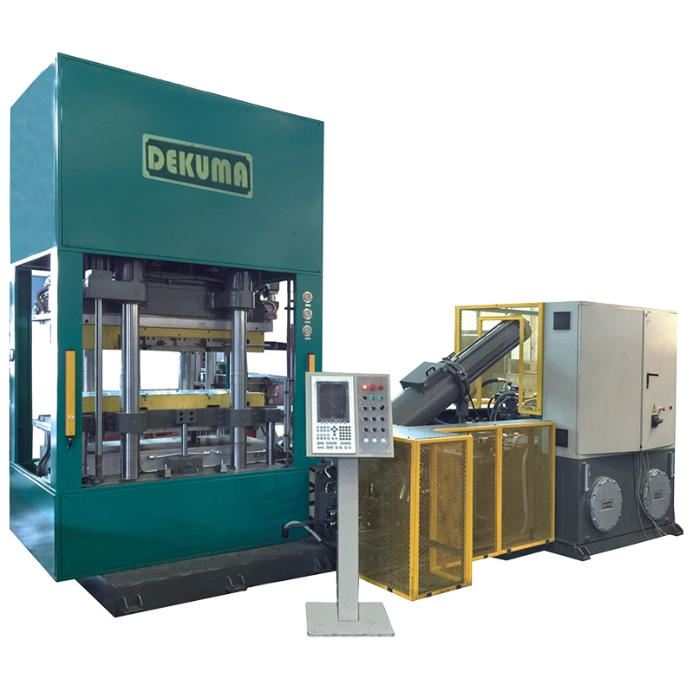
This is where the RT Series Rubber Injection Molding Machine from Dekuma fits the application. It is specialized for HTV silicone rubber products and is designed for long and large electrical insulation components. The machine uses an Austrian-made B&R control system together with a practical structure intended for this type of molding work.
The RT Series Addresses Specific Molding Needs
The RT Series combines a top-opening mould structure with a block-type clamping unit. These features relate directly to the handling and molding requirements of long electrical insulation parts rather than serving only as general machine additions.
Hydraulic mould thickness adjustment provides a practical way to work with different mould dimensions. The optimized injection system is intended to support stable HTV silicone rubber molding, which is relevant for products with long flow paths or larger cavities.
For companies comparing equipment, an HTV silicone insulators injection machine should be evaluated together with mould size, component length, silicone compound, cycle requirements, and material handling. Machine specifications alone do not describe how smoothly the complete production process will operate. Buyers should also review how mould changes and long-part handling fit the planned factory workflow.
A More Practical Direction for Future Production
Future HTV silicone insulator manufacturing is likely to place greater attention on repeatability, workable mould access, and equipment designed around large electrical components. For high voltage insulator production, manufacturers need to connect machine structure with tooling, material behavior, handling methods, and process control rather than treating each factor separately.
Dekuma positions the RT Series around these application needs. The value of such equipment depends on how closely its structure matches the intended products and production conditions. Future investment decisions will therefore be less about choosing a larger machine and more about selecting a molding platform that supports long-component handling, controlled injection, practical adjustment, and repeatable manufacturing.